Building a Daily Routine for Indoor Cats: Feeding, Play, and Rest
Indoor cats thrive on a day that repeats without becoming rigid. Many cats already run a private schedule: long rest, a burst of energy at dusk, grooming, another nap. Your job is to align meals, play, and litter care with that biology and with the hours humans are actually home. A routine reduces 3 a.m. athletics for some cats, not because a clock forbids night activity, but because hunting-style play and a snack happened earlier in the evening.
This article shows how to sketch a daily indoor-cat routine around feeding, play, and rest. It will not prescribe a diet or promise that every cat will sleep through the night. Medical issues such as hyperthyroidism, pain, or elimination problems can look like “bad habits” and need a veterinarian, not a stricter timetable.
Morning: litter, water, and a gentle start
Begin with the box. Scooping first thing tells you whether the night was normal. A sudden change in volume, frequency, or location is information worth writing down. Refresh water and glance at leftover food. A cat who usually finishes breakfast and today walks away may be telling you more than “picky.”
If mornings are hectic, keep them boring on purpose. A calm greeting, a scooped box, and breakfast at a consistent time beat a loud play session while you also try to leave for work. Save the wilder wand-toy games for a window you can finish.
Meals as daily landmarks
Many indoor cats do well with measured meals rather than a bowl that never empties, both for weight and because a finished meal is easier to notice when it goes untouched. Puzzle feeders or scattering a portion of kibble for searching can stretch a meal into an activity. Wet food, dry food, or a mix should follow what your veterinarian considers appropriate for that cat.
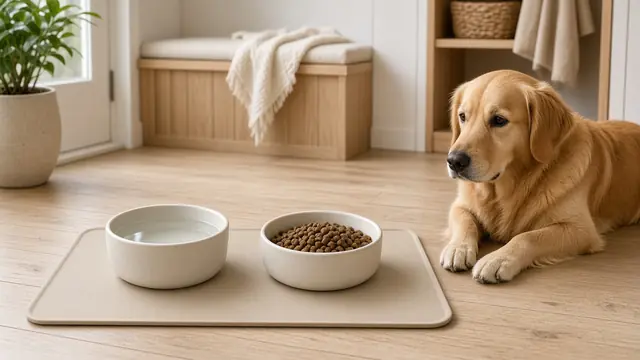
Place bowls away from the litter box and, in multi-cat homes, out of a doorway that another cat can block. Details on household feeding habits are in fresh water and feeding routines.
Play windows that mimic a hunt
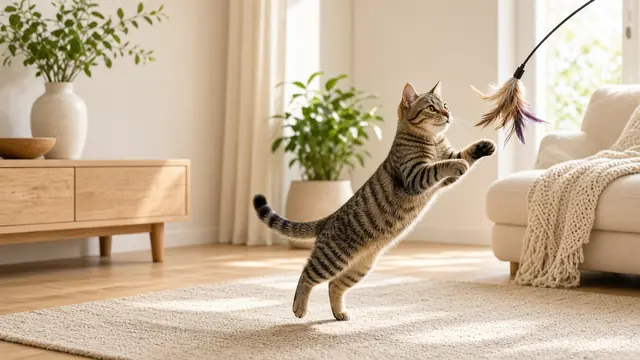
Wand toys let a cat stalk, chase, pounce, and catch. End the game with a catch the cat can “kill,” then offer a small meal or a portion of a regular meal. That sequence matches hunt-eat-groom-sleep more closely than dangling a toy forever and putting it away while the cat is still wound up. Two or three five-minute sessions often fit a workday better than one ambitious hour.
Morning-optional, evening-likely: many cats are crepuscular, meaning they are naturally more active near dawn and dusk. If 10 p.m. is when your cat sprints down the hallway, try a serious play session at 9:15 rather than scolding the sprint. More ideas are in indoor cat enrichment.
Midday rest and human absence
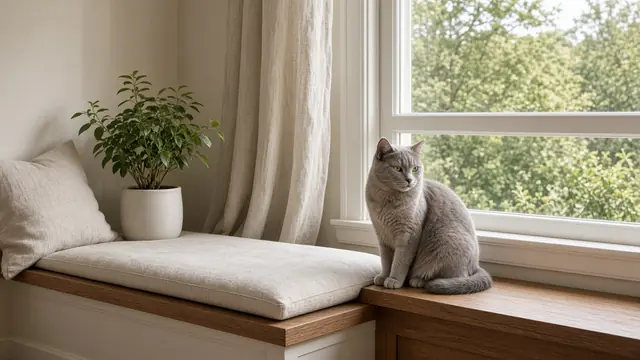
When you leave, the environment should still work. Leave a window perch if the window is secure, a hiding box, and toys that do not include dangling strings the cat can swallow unsupervised. A radio is optional and not a substitute for setup. If a cat destroys things only when left alone for long hours, talk with a veterinarian about whether anxiety, boredom, or another issue is involved rather than assuming spite.
Evening wind-down
Evenings are for play, a last meal if that is your pattern, another box scoop, and then a quieter house. Dimmer lights and less chase at bedtime help some cats shift into rest. People who stay up late watching bright screens and tossing toys until midnight are training a nightlife.
Write the repeating pieces into the pet routine planner if a visible list helps everyone in the home share the work: who scoops, who plays, who buys litter.
A sample weekday
A person who leaves at 8:15 might scoop and feed at 7:30, offer a two-minute wand game if time allows, leave a puzzle portion of food, then after work play for five to ten minutes, feed dinner, scoop again, and sit quietly while the cat grooms nearby. Nothing about those times is official. What matters is that they can happen on a Thursday when everyone is tired.
Common mistakes
- Free-feeding and then wondering why play has no effect on body weight.
- Only playing with laser dots that the cat never catches, which can be frustrating if there is no ending “catch.”
- Letting boxes go unscooped until weekends.
- Adding a second cat to “entertain” the first without extra resources or a slow introduction.
- Interpreting night activity as revenge rather than unmet hunting drive or a medical issue.
When the routine should change
Senior cats may need boxes with lower sides and more frequent check-ins. Kittens need more play and more frequent meals. After a move or a new baby, temporarily shrink the cat’s world to a well-stocked safe room rather than insisting on the old floor plan. Any routine that ignores pain, thirst, or litter changes is the wrong routine.
Conclusion
A daily indoor-cat routine is a handful of repeating kindnesses: clean litter, reliable meals, short hunts, and places to disappear. Align play with the hours your cat is already awake, share the chores so they survive busy weeks, and treat deviations in eating or eliminating as reasons to call a clinic. The best schedule is the one your household can still recognize on an ordinary Wednesday.
Multi-cat timing
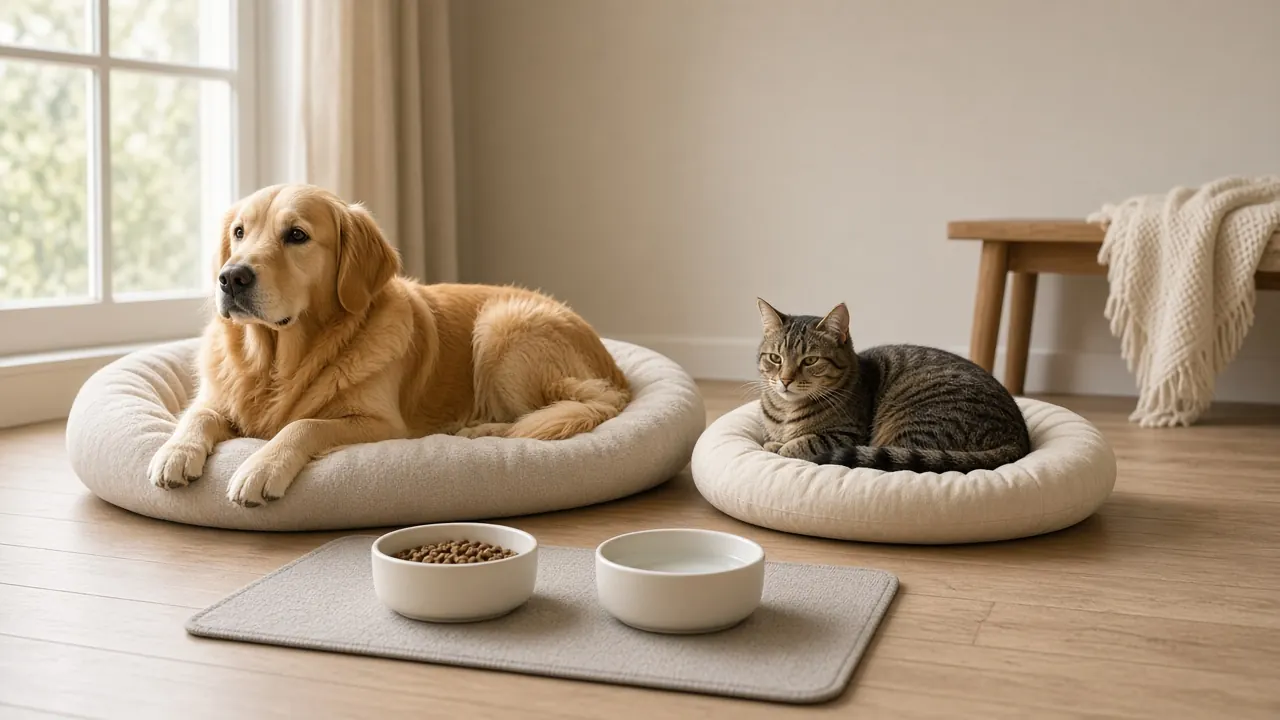
When two cats share a home, stagger some resources in time as well as space. A timid cat may eat more readily after the bolder cat has left the kitchen. Play with one cat while the other watches from a perch, then reverse. If one cat blocks a hallway at the same time every evening, add a second path or a second box so the routine of the blocked cat does not collapse.
Track each cat’s meals separately for a few days if you are not sure both are eating. Shared bowls hide weight loss until it is obvious.
Sources and further reading
- Cat care - The Humane Society of the United States
- Cat owner resources - American Association of Feline Practitioners
- Pets and animals: pet care resources - American Veterinary Medical Association
Platform interfaces and policies change. Treat official documentation as the current reference, and read our editorial policy and disclaimer.