Indoor Cat Enrichment: Play, Climbing, and Everyday Activities
Indoor life is safer from traffic and many predators, but it can also be repetitive. Enrichment gives an indoor cat legal ways to hunt, climb, watch, and solve small problems. It is not a promise that a cat will stop nighttime running or scratching a particular sofa. It is a way to spend the cat’s brain and body so the house is not the only puzzle available.
This guide focuses on play, climbing, and everyday activities you can repeat without specialized equipment. Combine it with a daily routine and a thoughtful layout. Sudden loss of interest in play can be medical; ask a veterinarian if a previously playful cat becomes withdrawn or irritable.
Play that lets the cat finish the hunt
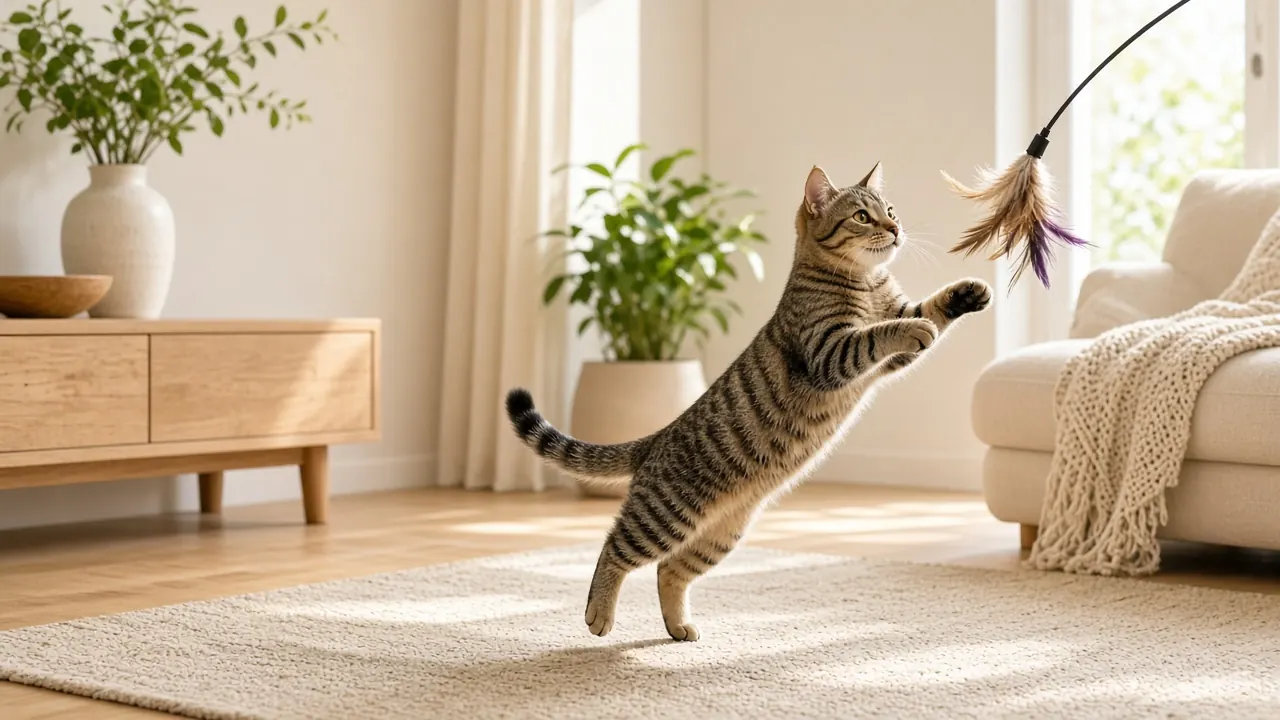
Wand toys with feathers or fabric at the end allow stalking from under the coffee table, a burst of speed, and a pounce. Move the lure like prey: hide, pause, twitch, then dash. Constant circling in front of the cat’s face is less interesting than something that disappears and reappears. After a catch, let the cat hold the toy for a moment, then trade for a snack or part of a meal.
Solo toys—balls in a large tub, spring toys—entertain some cats and bore others. Rotate what is available so yesterday’s mouse is not still lying in the same sunbeam unread. Avoid toys with pieces that can be chewed off and swallowed. String, rubber bands, and tinsel are dangerous leftovers; pick them up when play ends.
Climbing and looking out
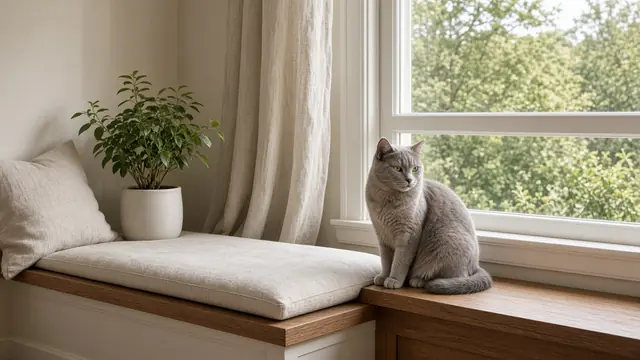
Cats investigate vertically. A sturdy tree, a series of wall shelves installed into studs, or even a cleared bookcase can become a route. Check stability before you invite a leap. Window perches should not depend on a weak suction cup over a high drop. The view itself is enrichment: birds, weather, sidewalk life. Close off rooms where a cat could push through a screen.
Cardboard boxes remain undefeated. A box on its side is a cave; a box with two doors is a tunnel. Paper bags without handles can be hiding spots. Remove plastic and handles that can trap a neck.
Foraging and scent
If your veterinarian is comfortable with it, deliver part of a meal through a puzzle feeder or by hiding kibble in paper cups. Start so easy that the cat succeeds immediately. Cats who only ever eat from a still bowl sometimes need a few days to understand the new game.
Cat-safe herbs such as catnip or silvervine delight some cats and do nothing for others. Offer them on a washable surface and do not assume more is better. Never replace veterinary pain care with an herb.
A household example
An apartment cat whose person returns at 6 p.m. might get a box “cave” left during the day, a window seat, and then a six-minute wand session, a portion of dinner, and a second shorter game later. On weekends, a new cardboard castle appears and then goes to recycling before it becomes clutter. The person writes play times into the planner so a roommate can run the evening hunt if a late train happens.
Common mistakes
- Using only a laser pointer with no physical catch at the end.
- Leaving yarn or hair ties out overnight.
- Buying a tall tree and placing it in the least used corner of the house.
- Forcing play when the cat has gone to a hiding spot.
- Adding a second pet as enrichment without considering stress.
Safety notes
Swallowing string can be a surgical emergency. So can chewing electrical cords. Choose toys you would trust if they came apart, and inspect them. If you use essential-oil diffusers, ask a veterinarian first; many concentrated oils are poor matches for cats. Keep lilies, which can be severely toxic to cats, out of the home entirely. Poison questions belong with a veterinarian or animal poison control, as outlined in pet-safe homes.
A weekly menu
- Daily short hunt-style play, ideally more than once.
- One rotating solo toy or box.
- At least one reliable climbing or window spot.
- A few foraging meals if appropriate.
- Quiet rest that is not interrupted “for their own good.”
Conclusion
Indoor cat enrichment is a hunting loop, a place to climb, and a few changing objects that still feel safe. Keep sessions short, let the cat catch something, pick up the dangerous leftovers, and treat a drop in playfulness as a health clue when it appears suddenly. A stimulated cat is not a frantic cat; it is a cat who had a job today and now can sleep on the bookcase in peace.
Shy cats and senior cats
A shy cat may watch a wand toy from under a chair for several sessions before a paw appears. That watching is participation. Do not drag the cat out to make the game look right. Senior cats may prefer toys that move more slowly and resting places with lower jumps. Arthritis can look like “grumpiness about play.” A veterinarian can help you sort pain from preference.
Night waking in older cats sometimes has medical causes such as thyroid disease or high blood pressure. More toys at midnight will not solve those. Mention the pattern at the next exam, or sooner if the cat seems disoriented.
Sources and further reading
- Cat owner resources - American Association of Feline Practitioners
- Cat care - The Humane Society of the United States
- Pets and animals: pet care resources - American Veterinary Medical Association
Platform interfaces and policies change. Treat official documentation as the current reference, and read our editorial policy and disclaimer.