Dog Enrichment at Home: Simple Activities for Everyday Engagement
Enrichment is anything that lets a dog use natural behaviors—sniffing, chewing, searching, problem-solving, or playing—in a way that is safe for your house. It is not a personality transplant, and it is not a pile of plastic gadgets. A cardboard box with crumpled paper and a few pieces of the dog’s regular kibble can be more useful than a toy that sits in a basket after one afternoon.
This guide offers simple at-home activities for everyday engagement. It does not promise to stop barking, digging, or chewing on its own. Those behaviors have many causes, including unmet needs, fear, and medical pain. A veterinarian should check a sudden behavior change. A qualified trainer can help when you need a structured plan.
Why everyday engagement matters
A dog that spends hours with nothing to do often invents projects: shredding a pillow, announcing every footstep in the hallway, or pacing at the window. Movement helps, but mental work matters too. Sniffing is tiring in a different way than jogging. Short training games build communication. Chewing, for dogs that can do it safely, occupies the mouth that might otherwise find a shoe.
Enrichment works best as a daily sprinkle, not a weekend binge. Ten minutes before you take a call can prevent half an hour of restless circling. Pair activities with the rest of a daily routine so the dog can predict when work and rest happen.
Scent and search games
Hide a portion of a meal in a muffin tin covered with tennis balls, in a towel rolled into a spiral, or around a single familiar room. Let the dog search rather than hovering and pointing. Start easy so the dog wins. Increase difficulty slowly. If the dog becomes frantic or starts guarding the area, make the game simpler and give more space.
Outdoor sniff walks count. A slow loop around the block where the dog is allowed to investigate grass can be more enriching than a fast mile with a tight leash. Weather and pavement temperature still matter; see seasonal pet care.
Chewing and foraging
Choose chews based on the dog in front of you. Some dogs splinter hard objects; some swallow pieces that are too large. If you are unsure whether an item is appropriate, ask a veterinarian or a veterinary dentist rather than guessing from packaging claims. Supervise new chews. Remove pieces that become small enough to swallow whole.
Food-dispensing toys can slow a meal for dogs who gulp. Introduce them when you are home to watch. A toy that is too difficult causes frustration; one that dumps everything in three seconds causes a shrug. Adjust until the dog works at a steady pace.
Training as enrichment
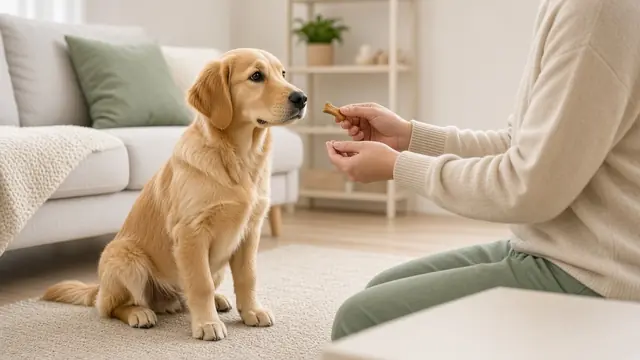
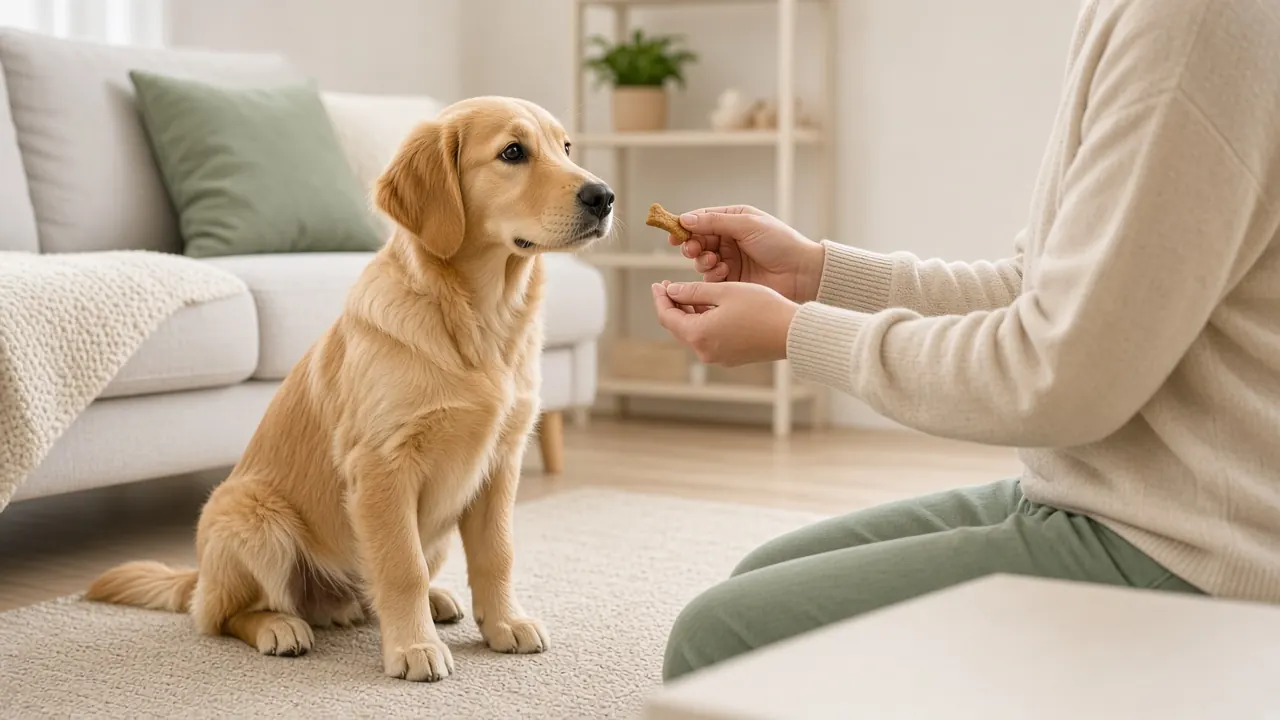
Two to five minutes of positive reinforcement is mental work: sit, hand target, a name response, or walking to a mat. Keep sessions short enough that you still sound friendly at the end. Ending while the dog is succeeding is more useful than drilling until everyone is annoyed.
Teach a “find it” cue for hidden kibble and a “settle on the bed” cue for after play. Those two skills turn excitement on and off more politely than hoping the dog self-regulates.
Social and physical play
Tug is acceptable for many dogs if you teach a drop cue and you start and stop the game. Chase games in a fenced yard can be wonderful and also overheating if they never pause. Watch tongue size, seeking shade, and slowing down. Not every dog enjoys rough play with other dogs; parallel sniffing on a walk may be plenty.
Household examples
A person working from a laptop can park a stuffed foraging toy at the start of a meeting and a chew afterward. A family with children can assign a “scatter breakfast in the grass” job to someone who likes being outside for three minutes. A retired owner who already takes long walks can add a Tuesday scent game so the week is not only mileage.
Common mistakes
- Buying six puzzles on one day and offering them all at once.
- Leaving a dog unsupervised with a toy that can be shredded and swallowed.
- Using enrichment only after a problem appears, then stopping as soon as the house is quiet again.
- Forcing a shy dog into a playgroup in the name of socialization.
- Ignoring pain. A dog who suddenly refuses games they loved may need a veterinary exam, not a new toy.
A weekly rotation you can actually keep
- Three sniff-heavy walks or yard sessions.
- A few meals delivered through a search game or a slow feeder if your veterinarian has no objection.
- Several tiny training sessions.
- One slightly novel item, such as a cardboard box to investigate, then recycled.
- Protected nap time so enrichment does not become constant stimulation.
Conclusion
Home enrichment is ordinary work: hide part of a meal, slow down a walk, teach one small cue, and offer a chew you have thought through. The goal is a dog who has legal ways to be a dog between the moments you can give direct attention. Keep activities short, safe, and repeatable, and let a veterinarian or trainer in when behavior or comfort changes instead of stacking more gadgets on the problem.
When enrichment should wait
A dog who is injured, recovering from surgery, or overheated does not need a new running game. Ask the veterinarian what kinds of sniffing or chewing are acceptable during recovery. Mental work can continue while running cannot, but only if the activity matches the medical advice you were given.
Puppies have shorter concentration windows and growing bodies. Several two-minute games beat one long session that ends in nipping. Avoid repeated high-impact jumping on hard floors as entertainment. The “simple” version of a game is usually the right version.
Sources and further reading
- Dog care - The Humane Society of the United States
- Pets and animals: pet care resources - American Veterinary Medical Association
- Position statement on humane training - American Veterinary Society of Animal Behavior
Platform interfaces and policies change. Treat official documentation as the current reference, and read our editorial policy and disclaimer.