Positive Reinforcement Basics: Understanding Rewards and Consistent Training

Positive reinforcement means adding something the animal wants after a behavior so that behavior becomes more likely next time. A piece of food when a dog sits, a treat when a cat comes toward a carrier, praise and play if those things actually matter to that pet—these are reinforcements when they follow the action closely. The idea is simple. The skill is timing, consistency, and noticing what your pet considers a reward.
This article explains rewards and consistent training for everyday household manners. It does not certify you as a trainer and it does not claim to rehabilitate aggression or panic. The American Veterinary Society of Animal Behavior has published position statements favoring humane, reward-based methods and cautioning against training that relies on fear or pain. If a pet is biting, freezing, or showing sudden behavior change, involve a veterinarian and, if needed, a qualified professional who uses modern, low-fear methods.
What counts as a reward
Food works for many animals because they already care about it. Some prefer play, sniffing time, or access to the yard. The animal decides. If your dog ignores store-bought biscuits in the park but will work for chicken, then chicken is the stronger reward in that setting—used in amounts that still fit the diet you and your veterinarian have discussed.
A reward that arrives too late teaches the wrong moment. If you ask for a sit, the dog sits, then jumps, and then you feed, you have paid the jump. Mark the sit quickly, then deliver the food. A short word such as “yes” can bridge the gap if you have paired that word with food consistently.
Consistency without rigidity
Consistency means the household agrees on the rules more than it means you never smile. If one person invites the dog on the couch and another scolds the same behavior, the dog receives a slot machine, not a lesson. Write down the few behaviors you care about: sitting before the door opens, coming when called in the yard, keeping paws off the counter. Teach those on purpose rather than hoping they appear.
Keep sessions short. One to five minutes, several times a day, beats a forty-minute drill that leaves everyone irritated. End while the pet is still succeeding. That pattern also works as enrichment or as part of cat play.
Teaching a simple sit or a name response
For a dog, wait for a sit or lure gently with food from the nose upward so the hind end lowers, then mark and pay. Repeat in slightly more distracting rooms over days, not seconds. For a name response, say the name once and pay when the pet orients toward you. Do not use the name as a warning or the name becomes something to ignore.
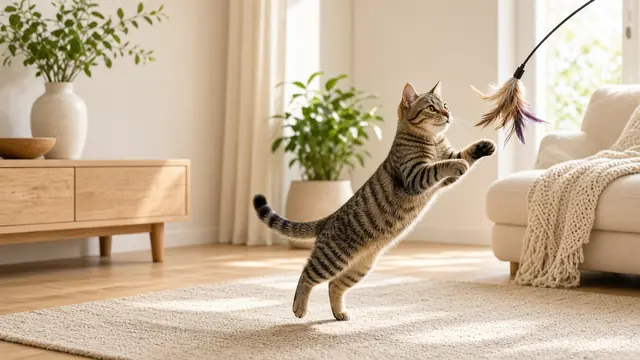
Cats can learn the same ideas: a target stick or a hand target, stepping into a carrier for food, sitting on a mat. Their sessions may be even shorter. Bribing a frightened cat out of a hiding place by dragging them is not training; it is a reason they will hide sooner next time.
What to do instead of punishment as a first tool
If you do not like a behavior, ask what you would rather see, then teach and pay that. Management helps while learning happens: baby gates, leashes, picked-up trash, and closed doors prevent rehearsal of the unwanted act. Yelling after a chewed shoe teaches very little about shoes and quite a lot about your arrival.
Corrections that rely on startle, pain, or intimidation can suppress warning signs and damage trust. They also do not explain what to do instead. If you feel stuck, get skilled help rather than escalating equipment.
Common mistakes
- Repeating a cue five times, then paying the eventual response, which teaches the pet to wait for the fifth ask.
- Using a reward the pet does not even like.
- Training only in the quiet kitchen and then blaming the pet at the park.
- Calling punishment “balanced” without a plan for reinforcement.
- Ignoring pain. A pet who suddenly refuses cues may be sore.
A week of tiny practices
- Name response in one room, then in a second room.
- Sit or hand target before meals.
- A mat or bed settle after play.
- Carrier or harness practice with food, without going anywhere.
- One outdoor or hallway repetition at a distance the pet can handle.
Conclusion
Positive reinforcement is a way of paying the behaviors you want with something the animal truly wants, delivered on time, in short sessions the household can repeat. Combine it with management so the pet is not constantly rehearsing chaos, and bring in veterinary or training professionals when fear or aggression shows up. Kind, clear training is not permissiveness. It is a conversation the pet can actually understand.
Working around fear
If a pet backs away, freeze, or growls, the environment is too hard for the current lesson. Increase distance, lower the noise, or end the session. Paying a pet for looking at a scary thing and then choosing to move away can be more useful than insisting they approach it. This is not spoiling. It is how you keep warning signals honest and the animal below a panic threshold.
Children can help by tossing food on the floor for a calm behavior rather than hugging. An adult should still handle planning. No child should be asked to reform a frightened dog or cat.
Sources and further reading
- Position statement on humane training - American Veterinary Society of Animal Behavior
- Dog care - The Humane Society of the United States
- Cat care - The Humane Society of the United States
Platform interfaces and policies change. Treat official documentation as the current reference, and read our editorial policy and disclaimer.