Pet Grooming Essentials: Building a Simple Home Care Routine
A simple home grooming routine is less about looking show-ready and more about comfort and early detection. Brushing, a glance at eyes and ears, a wipe of muddy paws, and the occasional bath or nail session help you notice problems while they are still small. Dogs and cats do not need identical tools, but they do need the same idea: short, predictable handling that does not only happen when someone is already dirty or tangled.
This article pulls dog and cat home care into one routine you can keep. Species-specific coat notes are in dog grooming basics and in the indoor-cat guides. Severe mats, painful skin, and nails that have grown into tissue need professional help.
Build handling before you need it
Teach a chin rest, a pause while you touch a paw, and a few seconds of looking in an ear. Reward with something the animal already likes, as outlined in positive reinforcement. Two minutes during an evening rest is better than a half-hour battle on a Sunday. Stop while the pet can still choose to stay.
Cats often prefer a warm towel on a sturdy table or your lap, with an escape route. Dogs often do better on a non-slip mat. Forcing either species onto a slick washer lid teaches them to avoid you the next time they hear the brush.
The weekly sweep
Look at coat, skin, eyes, ears, mouth as much as the animal allows, paws, and the area under the tail. Part the fur. Feel for lumps, mats, ticks, or dampness. Note anything new in a notebook so you are not reconstructing memories at the clinic. That notebook also helps when you are preparing for a veterinary visit.
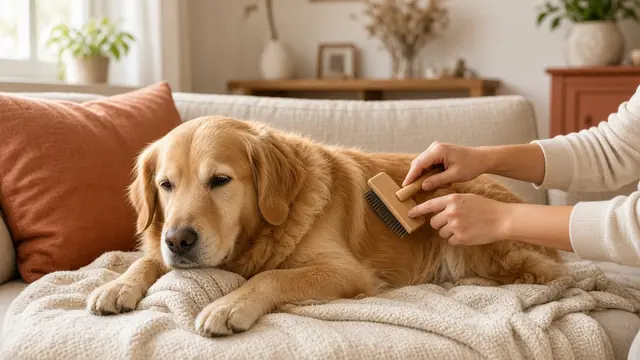
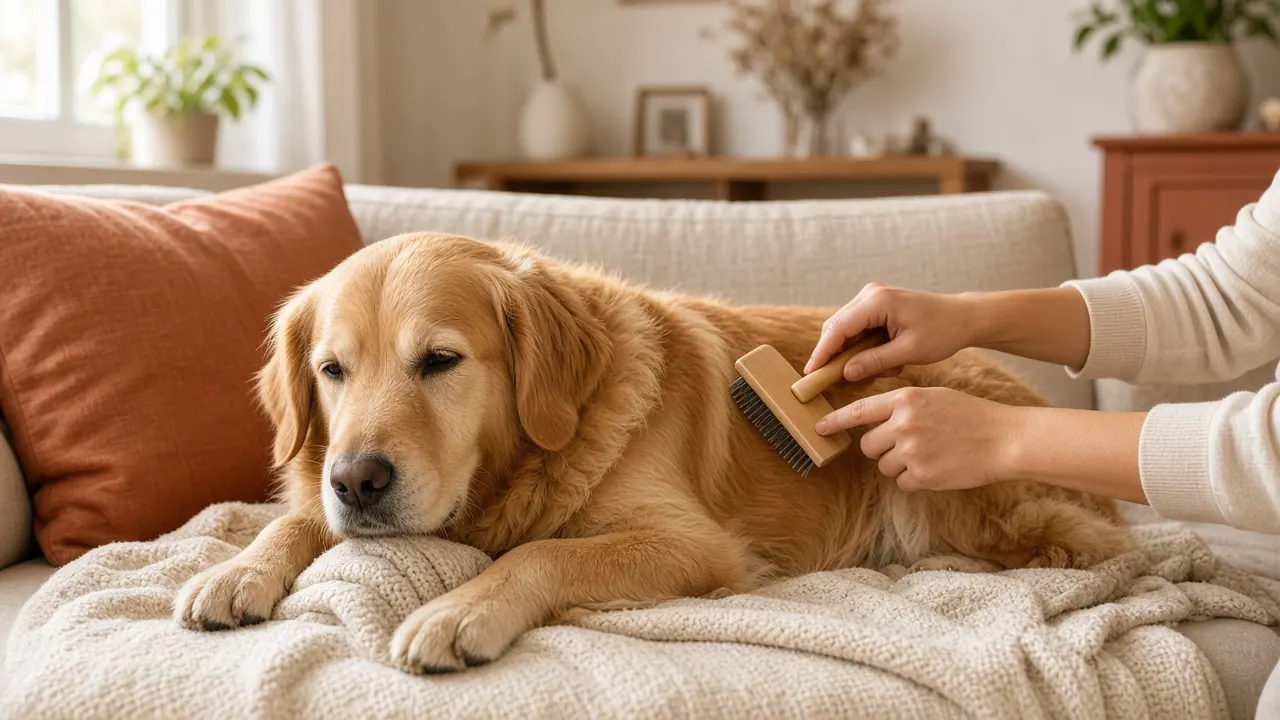
Brush according to coat: frequent for long or dense coats, less often for many short coats, always gently around tender spots. Cats who groom themselves still benefit from help during shed seasons. Hairballs are not a personality; repeated vomiting should be discussed with a veterinarian rather than treated as a joke.
Baths, dry shampoo myths, and smell
Bathe when the coat is dirty or when a veterinarian recommends a medicated wash. Use products meant for that species unless you have been told otherwise. Rinse well. Dry thoroughly, especially on cats who resent lingering dampness and on double-coated dogs who can stay wet near the skin.
Persistent odor can come from teeth, ears, anal glands, or skin disease. More perfume is not a diagnosis. If cleaning the coat does not change the smell, book an exam.
Nails and hair around paws
Trim or file small amounts regularly. Having two people—one to feed something tasty, one to trim—helps many households. If you cannot see the quick, take less. For cats, trim only the sharp tip of the front nails if that is all you can do well; hind nails can wait for a professional if needed.
Keep hair from matting between dog pads. Ice melt and hot pavement are seasonal reasons to check paws more often, as described in seasonal pet care.
A shared household checklist
- Brush or comb on a repeating schedule you can keep.
- Paw check after messy or winter walks.
- Ear glance weekly; no deep swabbing.
- Nail plan: home or professional, written on a calendar.
- Bath only when needed, with thorough drying.
- One person responsible for noticing coat changes, even if chores rotate.
Common mistakes
- Waiting until mats form a single felt layer.
- Using essential oils or human acne products on pet skin.
- Skipping grooming in dark-coated animals because dirt is harder to see.
- Calling a cat “low maintenance” and never looking under the collar or in the armpits.
- Punishing wriggles instead of making the session shorter.
Conclusion
Grooming essentials are a loop: handle gently, look closely, brush often enough, bathe occasionally, and ask for help before a problem becomes a project. Put the repeating pieces on a dog or cat routine so they are not left to memory. Comfort is the measure of success, not a salon finish, and a veterinarian should see anything that hurts, smells unexpected, or changes quickly.
Sharing the work without surprising the pet
If two people groom, use the same tools and the same order of events so the pet is not re-learning the session each time. Write a short list: brush, paws, reward. Store tools in one place so you do not skip a week because the comb is missing. After a professional grooming visit, ask which knots returned first so you can focus there at home.
Pets recovering from surgery may have cones, sutures, or shaved patches. Follow the clinic’s cleaning instructions rather than adding new shampoos. Home grooming should never pull at a healing site.
Sources and further reading
- Pets and animals: pet care resources - American Veterinary Medical Association
- Dog care - The Humane Society of the United States
- Cat care - The Humane Society of the United States
Platform interfaces and policies change. Treat official documentation as the current reference, and read our editorial policy and disclaimer.